How to Play Chess for Beginners: Rules, Moves and First Steps
Updated 2026-10-23
Chess has a reputation for being hard, but the rules take about fifteen minutes to learn and a game against a friend can be over in ten. What takes time is playing it well. This guide covers how to set up the board, how each piece moves, the special moves, how a game ends, a short list of principles that stop most beginner losses, the traps people fall into most, and a few ways to make games with a friend closer. At the end there are free chess games you can play in your browser with a friend on the same screen.
The goal
You win by checkmate: your opponent's king is attacked and has no way out. You do not capture the king. The game stops at the moment it would be captured next move. Everything else in chess, from capturing pieces to controlling the centre, serves that goal.
The board and the setup
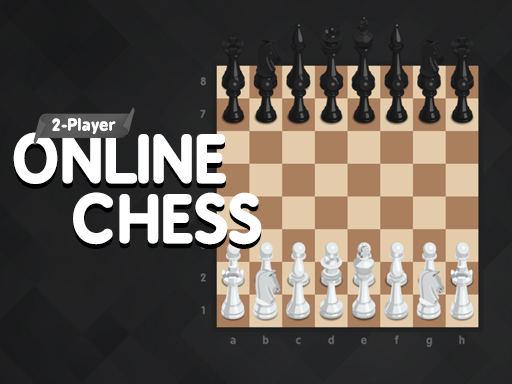
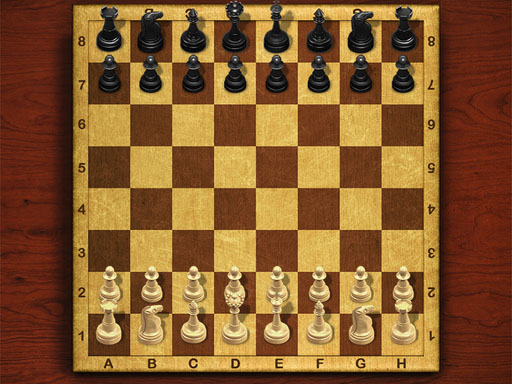
The board is 8 by 8, with light and dark squares alternating. Turn it so that each player has a light square at their bottom-right corner. The columns are called files and are lettered a to h from left to right as White sees them. The rows are ranks, numbered 1 to 8 from White's side. Every square has a name, such as e4 (file e, rank 4). This is how moves are written, and this guide uses it throughout.
Each side has 16 pieces:
- 8 pawns on the second rank (rank 2 for White, rank 7 for Black).
- 2 rooks in the corners (a1, h1 for White).
- 2 knights next to the rooks (b1, g1).
- 2 bishops next to the knights (c1, f1).
- 1 queen on d1 for White, d8 for Black. The queen always starts on her own colour: the white queen on a light square, the black queen on a dark one.
- 1 king on e1 for White, e8 for Black.
White moves first, then the players alternate. You must move on your turn. You cannot pass.
How the pieces move
- King: one square in any direction. It can never move onto a square attacked by an enemy piece.
- Queen: any number of squares in a straight line: along a rank, a file or a diagonal. She is the strongest piece.
- Rook: any number of squares along a rank or a file.
- Bishop: any number of squares diagonally. A bishop stays on the colour it starts on, so each side has one light-squared and one dark-squared bishop.
- Knight: an L-shape: two squares in one direction and one square at a right angle. The knight is the only piece that jumps over other pieces.
- Pawn: moves forward one square, never backward. On its first move it may go two squares. Pawns capture diagonally forward, one square, and cannot capture the piece in front of them. A pawn blocked by a piece directly in front cannot move forward.
All pieces except the pawn capture the way they move: they land on the square of an enemy piece and remove it. You cannot capture your own pieces.
Three special moves
Castling
Castling moves the king to safety and brings a rook into play in one move. The king moves two squares toward a rook, and that rook jumps to the other side of the king. White can castle short by moving the king from e1 to g1 and the rook from h1 to f1, or long by moving the king to c1 and the rook from a1 to d1. You can castle only if:
- neither the king nor that rook has moved before,
- there are no pieces between them,
- the king is not in check, and does not pass through or land on a square under attack.
En passant
If an enemy pawn moves two squares forward from its starting rank and lands beside your pawn, you may capture it as if it had moved only one square. You must do it immediately on the next move, or you lose the right. The rule exists so a pawn cannot slip past your pawn by jumping the square it controls.
Promotion
When a pawn reaches the far rank it must be promoted: you replace it with a queen, rook, bishop or knight of the same colour. You almost always choose a queen. This is why a pawn that gets through is so dangerous in the endgame.
Check, checkmate and draws
- Check: your king is attacked. You must respond at once. You can move the king to a safe square, block the line of attack, or capture the attacking piece. Moving into check is illegal.
- Checkmate: you are in check and none of those three answers works. The game is over and the player who gave checkmate wins.
- Stalemate: it is your turn, you are not in check, and you have no legal move. The game is a draw, not a win for the other side. Beginners who are far ahead often throw away a win by stalemating their opponent.
A game can also be drawn by agreement, by threefold repetition (the same position three times), by the fifty-move rule (fifty moves without a capture or pawn move), or when neither side has enough pieces left to checkmate, such as king against king.
What the pieces are worth
Chess players count material using rough point values. These are guidelines for deciding whether a trade is fair, not part of the rules.
- Pawn: 1
- Knight: 3
- Bishop: 3
- Rook: 5
- Queen: 9
The king has no value because it can never be traded. A rook for a knight and a pawn is roughly even, a queen for a rook and a bishop is roughly even, and giving a knight for a pawn loses material. Before you capture, check what the capture costs you.
Ten principles for the first fifteen moves
- Control the centre. Move a central pawn, e4 or d4 as White, on move one. The centre squares d4, e4, d5 and e5 give your pieces room.
- Develop your knights and bishops. Get them off the back rank toward the middle. Knights usually go first, to f3 and c3 as White.
- Do not move the same piece twice in the opening unless you have a reason. Every move spent on one piece is a move your opponent uses to develop another.
- Castle early, usually within the first ten moves. It protects the king and activates a rook.
- Bring the queen out late. A queen on the move early is chased by cheap pieces and loses tempo.
- Do not move many pawns. Each pawn move leaves holes. Move the ones that open lines for your bishops and fight for the centre.
- Connect your rooks by clearing the back rank so they protect each other.
- Put rooks on open files, files with no pawns on them.
- Keep your pieces protected. An undefended piece is a gift.
- Before every move, check your opponent's last move. Ask what it attacks and what it threatens.
Tactics you will meet every game
The fork
A fork is one piece attacking two things at once. The knight is the best forker. Imagine a black king on g8 and a black queen on c8, and a white knight lands on e7. The knight gives check to the king and attacks the queen at the same time. Black has to deal with the check, and White takes the queen. Always look at squares where your knight can attack two valuable pieces.
The pin
A pin attaches a piece to something more valuable behind it. If a white bishop is on b5, a black knight on c6 and the black king on e8, the knight cannot move without exposing the king to check. A pinned piece is easy to attack because it cannot run away.
The back-rank mate
If a king sits behind its own pawns, for example a king on g1 with pawns on f2, g2 and h2, it has no squares to escape. A rook that reaches the back rank, such as a rook arriving on e1 from e8, gives checkmate. Avoid it by giving your king a flight square: move one pawn in front of the king (h3, for instance) once the rooks are active.
The four-move trap
The most famous beginner trap is scholar's mate: 1. e4 e5 2. Qh5 Nc6 3. Bc4 Nf6?? 4. Qxf7#. White's queen and bishop both aim at f7, which is guarded only by the king. You can stop it with 3...g6, attacking the queen, or by covering f7 early. If you are playing the attacker, expect an opponent who knows the defence and be ready to bring your queen back.
How to start checkmating
You will need a few basic mates, because most games between beginners end in the endgame.
- Queen and king against king: use the queen to take away squares and push the enemy king toward the edge, staying a knight's move away from it. Be careful of stalemate: leave the enemy king one legal move before you deliver mate.
- Two rooks against king: the ladder mate. One rook cuts the king off along a rank, the other rook gives check on the next rank, and the pair walk the king to the edge, rank by rank.
- King and pawn against king: push the pawn to the last rank with your king in front of it. Promoting to a queen turns the endgame into the queen mate above.
Mistakes that lose beginner games
- Leaving a piece undefended. Most lost games are lost to a hung piece, a piece that an enemy piece can capture for free. Check this on both sides before each move.
- Moving without looking at the reply. Ask "what does my opponent want to do after this?" before you move.
- Attacking too early with the queen. The queen is valuable and easy to chase.
- Forgetting to castle and leaving the king in the centre where open files make it vulnerable.
- Trading pieces when you are behind. Swap when you are ahead in material, and avoid swaps when you are behind.
- Grabbing material with a risky capture. A free pawn that costs you three moves of development is often a bad deal.
Playing chess with a friend: ways to keep it close
- Set a clock. Ten minutes each is a good game. Five minutes each makes blunders more likely.
- Allow one take-back each. It lets beginners learn from a slip without wrecking the game.
- Handicap the stronger player. Take a knight off the board before you start.
- Swap colours every game. White has a small advantage, so alternate for fairness.
- Try a variant. If you want a quick, odd game, Mini Dice Chess is a fast chess variant where dice decide which pieces you can move, according to its description.
Play chess online
Our free chess games run in your browser. Master Chess Multiplayer has a mode for two players on the same device, and the description of 2 Player Online Chess says you can play against a friend or the computer. Chess Master King lists a two-player mode too. Open the game and look at the mode list before you start, since not every option on a page is for two people. All of them are in the Board and Card games category.
When you are comfortable with the rules, read our guide to chess openings for beginners. More guides: how to play checkers, how to win at Connect 4 and the best board games for 2 players.
FAQ
- How do you play chess for beginners?
- Set up the board with a light square at each player's bottom-right corner, put 16 pieces on each side, and take turns moving one piece at a time, White first. The aim is to checkmate the opposing king. Learn how each piece moves, then the three special moves: castling, en passant and promotion.
- What is the first move in chess?
- White always moves first. A good first move is a central pawn: e4 or d4. It opens lines for the queen and a bishop and takes space in the centre.
- How does each chess piece move?
- The king moves one square in any direction. The queen moves any distance along a rank, file or diagonal. Rooks move along ranks and files, bishops along diagonals, and knights in an L-shape that can jump over other pieces. Pawns move forward one square (two from their start square) and capture diagonally.
- What is checkmate?
- Checkmate is when a king is in check and cannot escape by moving, blocking or capturing the attacker. It ends the game with a win for the player who delivered it.
- What is the difference between checkmate and stalemate?
- In checkmate the king is attacked and has no escape. In stalemate the player to move is not in check but has no legal move at all. Stalemate is a draw.
- How many pieces does each side have in chess?
- 16: eight pawns, two rooks, two knights, two bishops, one queen and one king.
- What are the most important beginner chess rules?
- Control the centre, develop your knights and bishops, castle early, keep every piece protected and check what your opponent's last move threatens before you move.
- How long does a game of chess take?
- A casual game with a friend usually takes 15 to 45 minutes. With a ten-minute clock for each player, a game lasts at most 20 minutes.