How to Play Chinese Chess (Xiangqi): Board, Pieces and Rules
Updated 2026-11-15
Chinese chess, called xiangqi (say "shiang-chee"), is a two-player strategy game from China. It is related to Western chess, but the board has a river across the middle, the pieces sit on the points where lines cross, and there are pieces such as the cannon that Western chess does not have. This guide covers the board, the seven kinds of piece and how each one moves, and how to win. We do not have a Chinese chess game on 2PlayerHub, so near the end there are the closest games we do have.
The board
- The board is a grid of 9 lines by 10 lines. Pieces stand on the intersections, not inside squares.
- A river runs across the middle, between the 5th and 6th rows. Some pieces can behave differently once they cross it.
- Each side has a palace, a 3 by 3 area at the back with diagonal lines marked. The general and the advisors never leave it.
The pieces
Each side has 16 pieces:
| Piece | Number | How it moves |
|---|---|---|
| General | 1 | One point up, down, left or right, inside the palace |
| Advisor | 2 | One point diagonally, inside the palace |
| Elephant | 2 | Exactly two points diagonally. It cannot cross the river |
| Horse | 2 | One point straight, then one point diagonally outward |
| Chariot | 2 | Any distance in a straight line, like a rook |
| Cannon | 2 | Moves like a chariot. Captures by jumping over exactly one piece |
| Soldier | 5 | One point forward. After the river, it can also step sideways |
Two pieces can be blocked:
- The elephant is blocked if there is a piece on the diagonal point it passes through.
- The horse is blocked if there is a piece on the straight point next to it that its first step would use. This is called "hobbling the horse's leg", and it can be a piece of either colour.
The starting position
Chariots stand in the corners. The horses are next to the chariots, then the elephants, then the advisors beside the general. The cannons stand two points in front of the horses. The soldiers stand on every other point in front of the cannons.
How capturing works
You capture by moving a piece onto a point where an enemy piece stands, and the enemy piece is removed. Pieces cannot jump over others, with one exception: the cannon.
The cannon moves like a chariot when it is not capturing. To capture, it needs exactly one piece of either colour between it and its target. It jumps over that piece (the "screen") and takes the enemy piece beyond it.
Pieces never promote in xiangqi. A soldier that reaches the far row stays a soldier.
The flying general rule
The two generals may never face each other on an open file with no piece between them. If they do, the general can capture across the board, so a move that leaves the generals facing is illegal.
Who moves first
Red generally moves first in modern tournaments. Historically it has varied, so agree on it before you start.
How to win
You win by putting the opposing general in checkmate. A general is in check when it could be captured on the next move, and the checking player should say so. It is checkmate when the checked player has no move that gets out of check.
Unlike Western chess, stalemate is not a draw in xiangqi. A player with no legal move loses.
Perpetual check, giving check forever, is not allowed and loses the game under tournament rules. Chasing an unprotected piece forever is also banned, apart from generals and soldiers. If neither side is breaking a rule, the game can be declared a draw.
Tips for beginners
- Develop the chariots early. They are your strongest pieces and are stuck in the corners at the start.
- Plan cannon captures. A cannon can only capture over exactly one piece, so look for lines with a screen.
- Watch for horses' legs. A blocked horse is nearly useless.
- Protect the palace. Keep advisors and elephants near the general.
- Check the generals' file before every move.
Chinese chess is not Chinese checkers
Chinese checkers is a different game, played with marbles on a star-shaped board. It has nothing in common with xiangqi apart from the name.
Games to play while you learn
We do not have a Chinese chess game yet. If you like the idea of a chess-style duel, these are the closest:
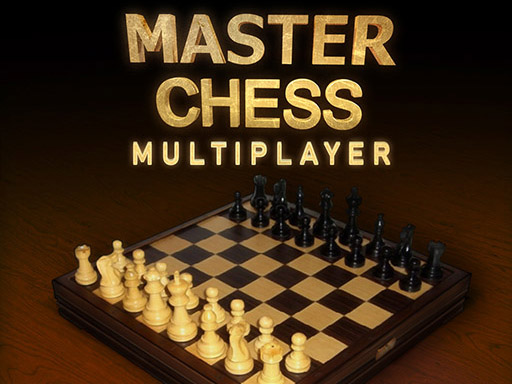
- Master Chess Multiplayer. Western chess with a player vs computer mode at three levels, and a board that shows where each piece can go. See how to play chess for beginners.
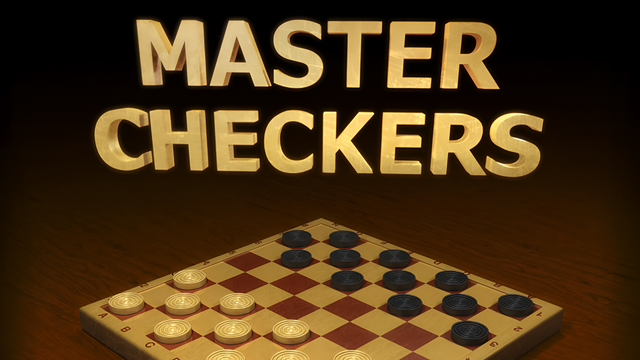
- Master Checkers. A capture game on an 8 by 8 board. Read chess vs checkers for the differences.
- Reversi Multiplayer. A strategy game with three computer levels.
- Backgammon Multiplayer. A dice and strategy game for two.
For more, see 2 player strategy games and games like chess.
FAQ
- How do you play Chinese chess?
- Two players take turns moving pieces on a 9 by 10 grid. Pieces stand on the intersections of lines. You win by checkmating the opposing general. Each piece type has its own movement rule.
- How many pieces are in Chinese chess?
- 16 per side: one general, two advisors, two elephants, two horses, two chariots, two cannons and five soldiers.
- What is the river in Chinese chess?
- The empty band across the middle of the board. Elephants cannot cross it, and soldiers gain the ability to step sideways once they have crossed.
- How does the cannon move in xiangqi?
- Like a chariot when not capturing. To capture, it must jump over exactly one piece, of either colour, on the way to its target.
- Who goes first in Chinese chess?
- Red generally moves first in modern tournaments.
- Is stalemate a draw in Chinese chess?
- No. A player who has no legal move loses.
- Is Chinese chess the same as Chinese checkers?
- No. Chinese checkers is a different game played with marbles on a star-shaped board.
- Can I play Chinese chess on 2PlayerHub?
- Not yet. Master Chess Multiplayer is the closest game, with Western chess rules.