Checkers Terms and Draughts Terms: A Plain-English Glossary
Updated 2026-11-13
Checkers and draughts are the same game with two names. Americans say checkers, and the British say draughts. The words below come up in rule books, strategy pages and online games, so this glossary explains them in plain English. It follows English draughts, the standard 8 by 8 game with 12 pieces each. Terms are grouped by topic, from the board to strategy. Where a name differs between American and British English, both are given.
Names for the game
- Checkers. The American name for the game. The game itself has also been called straight checkers or chequers.
- Draughts. The British name for the same game. Draughts also covers related games such as international draughts (10 by 10) and Turkish draughts.
- English draughts. The formal name for American checkers: 8 by 8 board, 12 pieces each.
- Chinese checkers. A different game, played with marbles on a star-shaped board. It is not related to the rules here.
The board and the pieces
- Dark squares. The 32 squares pieces move on. The 32 light squares are never used.
- Man. An ordinary piece. A man moves and jumps diagonally forward only.
- King. A man that has reached the far row. It is shown by stacking a second piece on top, and it moves and jumps diagonally in any direction.
- Black and White (or Red and White). The two sides. The darker colour moves first. Traditional sets use red and white, and black and red are common in the US.
- King row. Also called the crownhead. The row nearest a player is their king row, because the opponent must reach it to crown a man.
- Back row. Another name for the row nearest you. Men that stay there guard it against crowning.
- Double corner. A corner where two dark squares sit side by side along the edge, such as g1 and h2 or a7 and b8. A lone king can shelter there.
- Single corner. The other kind of corner, where a single dark square sits in the corner itself.
- Centre. The squares in the middle of the board. Pieces there have the most moves.
Moving and capturing
- Move. A piece slides one square diagonally onto an empty dark square.
- Jump (capture). A piece leaps diagonally over an adjacent enemy piece onto the empty square beyond it, and the jumped piece is removed. Any piece can jump a king.
- Mandatory capture. If you can jump, you must. This is the rule that makes most checkers tactics work.
- Multiple jump (double jump). A piece keeps jumping in the same turn if another capture is available. It can change direction, and all jumps in the chosen sequence must be made.
- Crowning (promotion). A man reaching the king row becomes a king. If it got there by jumping, the turn ends at once.
- Huffing. An obsolete rule that let you remove an opponent's piece if they skipped a capture. It is not in the modern rules.
How to write down moves
- Square numbers. Dark squares are numbered 1 to 32.
- Move notation. A move is written as from-to, for example 9-14.
- Capture notation. A capture uses an x, for example 14x23.
- Result abbreviations. BW or RW means Black or Red won, and WW means White won.
Winning, drawing and losing
- Win. You win by capturing all the opponent's pieces or by leaving them with no legal move.
- Blocked (barred). A side with no legal move loses, even if it still has pieces.
- Draw. The game is drawn if neither side can force a win, or if both players agree.
Strategy terms
- Tempo. One move. Late in a game, whoever runs out of safe moves first has to give up a piece. For a deeper look, read checkers strategy.
- Exchange (trade). A swap in which each side loses a piece.
- Sacrifice. Giving up a piece on purpose to gain something bigger. A sacrifice that leads to a winning series of jumps is called a shot.
- Bridge. Two back-row men on c1 and g1 that stop enemy men reaching the king row without being jumped, as long as the landing squares are empty.
- Opening. The first few moves. Tournament play often limits the first three moves to accepted openings, called the three-move restriction.
- Endgame. The stage when few pieces remain and kings decide the game.
Terms from other versions
- Flying king. A king that can slide several squares along a diagonal. International draughts uses it, but English draughts does not.
Learn the terms by playing
Reading the terms is fine, but they stick better in a game. Try them in these free versions:
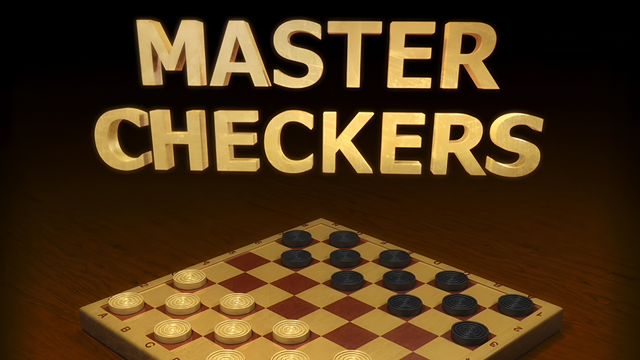
- Master Checkers, played in its Italian version, against the computer, a local player or opponents online.
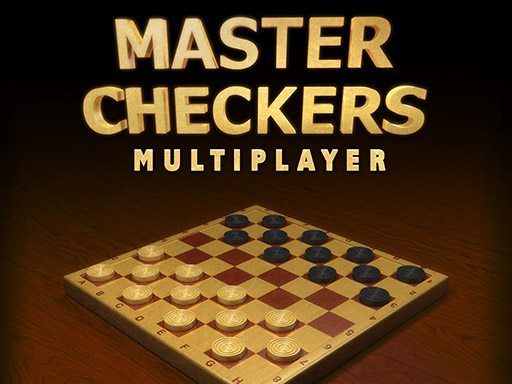
- Master Checkers Multiplayer, a clean browser version with a multiplayer mode, a computer mode and a same-device mode.
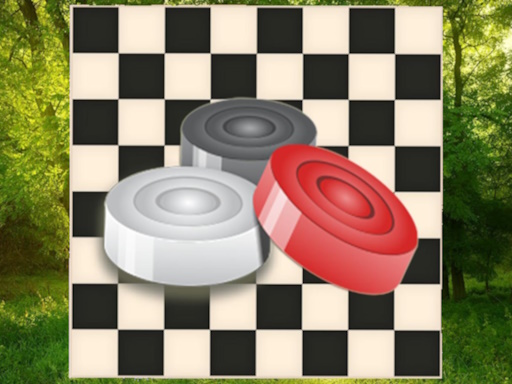
- Classic Checkers: Forest, which follows the classic rules in a forest setting.
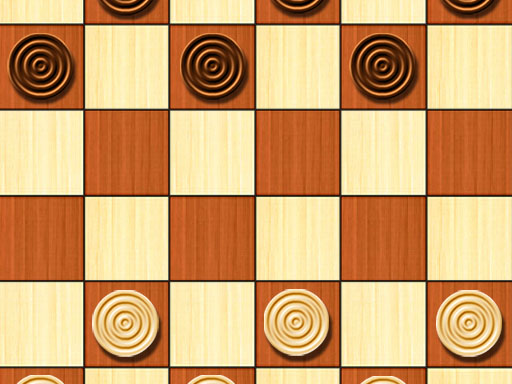
- Checkers Strategy Board Game.
For the basic rules, read how to play checkers. To set up the board, see checkers setup. If you are comparing it with chess, see chess vs checkers.
FAQ
- What is the difference between checkers and draughts?
- Nothing in the basic game. Checkers is the American name, and draughts is the British name for English draughts on an 8 by 8 board with 12 pieces each.
- What is a king in checkers?
- A man that has reached the far row. It is marked with a second piece on top and can move and jump diagonally in any direction.
- What is the king row?
- The row closest to a player, also called the crownhead. The opponent's men are crowned when they reach it.
- What does huffing mean in checkers?
- An older rule in which a player who missed a capture could have the piece removed by the opponent. Modern rules make capturing mandatory instead.
- What is a double corner?
- A corner where two dark squares sit side by side along the edge, such as g1 and h2. It is a safe place for a lone king.
- What does tempo mean in checkers?
- One move. Players count tempo to see who will run out of safe moves first.
- What does 9-14 mean in checkers notation?
- A move from square 9 to square 14. Dark squares are numbered 1 to 32, and captures are written with an x, such as 14x23.