Chess Openings for Beginners: Simple Moves to Start Every Game
Updated 2026-10-24
An opening is how you play the first ten or twelve moves of a chess game. Nobody needs to memorise long lines to play good chess, but a small set of openings you know well saves you from the common ways beginners lose in the first ten moves. This guide explains what an opening is trying to do, then gives you one reliable way to start as White, one way to answer each of White's two main first moves as Black, the traps to know about, and a simple plan for learning them. Moves are written in standard notation. If you need a reminder of how the pieces move, read how to play chess for beginners first.
What an opening is for
Every good opening does the same four things:
- Fights for the centre with pawns and pieces, so your pieces have room to move.
- Develops the knights and bishops off the back rank.
- Castles to get the king safe and bring a rook toward the middle.
- Avoids early weaknesses, such as an early queen sortie or a string of pawn moves that leaves holes.
If you can follow those four ideas, you are playing a sound opening even if you have never seen the line before. Names and move orders are shortcuts for ideas, and the ideas matter more.
How to read the moves
Each move is written with a number, then White's move, then Black's move. 1.e4 e5 means White played a pawn to e4 and Black replied with a pawn to e5. A capital letter names the piece: N is a knight, B a bishop, R a rook, Q the queen, K the king. Pawns have no letter. An x is a capture, + is check, # is checkmate, and O-O is castling short.
Playing White: start with 1.e4
For a first opening as White, 1.e4 is the simplest choice. It takes the centre, opens the diagonal for your queen and your light-squared bishop, and leads to open positions where tactics decide games. Most beginner opponents answer with 1...e5, and then you have two good set-ups to choose from.
The Italian Game
1.e4 e5 2.Nf3 Nc6 3.Bc4
Your knight attacks the e5 pawn and your bishop eyes the f7 square, which only the black king guards. This is the Italian Game, and it is the opening most coaches recommend first because the plans are clear.
- Black's most common replies are 3...Bc5 (the Giuoco Piano) and 3...Nf6 (the Two Knights Defence).
- Your usual plan: play c3 and d4 to build a big pawn centre, castle short, and bring your other knight to d2 or c3.
- Watch for Nf3 and Bc4 aiming at f7 every game. Many opponents leave that pawn badly protected.
The Ruy Lopez
1.e4 e5 2.Nf3 Nc6 3.Bb5
The bishop pressures the knight that guards e5. It is a slower, more strategic opening and has been played at the top level for centuries. A common start is 3...a6 4.Ba4 Nf6 5.O-O Be7. Choose this one if you like quiet pressure over fast attacks. It needs more patience than the Italian Game.
The Scotch Game
1.e4 e5 2.Nf3 Nc6 3.d4
You open the centre at once and trade your d-pawn for Black's e-pawn. It is less common, so opponents may be unfamiliar with it, and it leads to open positions where developing quickly is rewarded.
Playing White: 1.d4 and the London
If you prefer quiet, solid positions to open fights, play 1.d4. The simplest set-up is the London System: pawns on d4, e3 and c3, a bishop on f4, a knight on f3, and the other bishop on d3.
A typical sequence is 1.d4 d5 2.Bf4 Nf6 3.e3 e6 4.Nf3 Bd6 5.Bg3 O-O 6.Bd3, followed by c3 and Nbd2. It is easy to learn because you play nearly the same moves against many replies. Its weakness is that it is passive, and a well-prepared opponent can equalise easily, but for a beginner that is a good trade for safety.
The Queen's Gambit
1.d4 d5 2.c4
You offer a pawn to pull Black's d-pawn away from the centre. It is called a gambit, but it is not a real sacrifice: if Black takes with 2...dxc4, you can play 3.e3 or 3.Nf3 and win the pawn back. Black can also decline with 2...e6 (the Queen's Gambit Declined) or 2...c6 (the Slav). The Queen's Gambit teaches central play and is a classic way to learn how a pawn structure shapes the middle of the game.
Playing Black against 1.e4
Pick one reply and learn it well.
- 1...e5 is the most direct. You take the centre with a pawn, free your bishop and queen, and can follow the same developing plan as White. Expect the Italian or the Ruy Lopez and answer with moves such as ...Nc6, ...Nf6, ...Bc5 or ...Be7, and castle.
- 1...c5, the Sicilian Defence, is the most popular reply at club level because it fights for a win. It also has the most theory, so beginners often struggle with it.
- 1...e6, the French Defence, builds a solid pawn wall and prepares ...d5. Its drawback is a bishop on c8 that is hard to activate, but the plans are simple.
- 1...c6, the Caro-Kann, also prepares ...d5, but keeps the bishop free. It is a safe choice for beginners who want fewer tricks to worry about.
For a first repertoire as Black, 1...e5 is the one to learn if you are happy to play against the Italian and Ruy Lopez, and the Caro-Kann is a good choice if you want less theory.
Playing Black against 1.d4
- 1...d5 answers in the same spirit. You meet 2.c4 with 2...e6 or 2...c6 and develop knights to f6 and d7 or c6.
- 1...Nf6 is more flexible. You wait to see what White does before deciding where the pawns go. It is a good practical choice, and you can still play ...d5 on the next move.
For beginners, pairing 1...d5 with a solid set-up of ...Nf6, ...e6, ...Be7 and castling short is the simplest plan.
One opening, move by move
Here is a calm Italian Game, showing what each move is for: 1.e4 e5 2.Nf3 Nc6 3.Bc4 Bc5 4.c3 Nf6 5.d3 d6 6.O-O O-O.
- 1.e4 e5: both sides take a share of the centre and open lines for their bishops and queens.
- 2.Nf3 Nc6: White attacks the e5 pawn, and Black defends it with a developing move.
- 3.Bc4 Bc5: both bishops go to active diagonals aimed at the other side's weakest point, f7 and f2.
- 4.c3 Nf6: White prepares d4 to claim the whole centre. Black develops the second knight and attacks e4.
- 5.d3 d6: White supports e4 with a pawn, a solid choice. Black does the same on e5 and opens the way for the bishop on c8.
- 6.O-O O-O: both kings castle, the rooks come toward the middle, and all that is left is the middle game.
After these six moves each side has two pieces developed, a safe king and a pawn in the centre. If your opening reaches a position like this, you have done the job, even without a single trick.
Traps worth knowing
These traps catch beginners. Learn them so you can use them and avoid them.
- Fool's mate: 1.f3 e5 2.g4 Qh4#. It is the fastest possible checkmate in chess and shows why you should not move the pawns in front of your king without a reason.
- Scholar's mate: 1.e4 e5 2.Qh5 Nc6 3.Bc4 Nf6?? 4.Qxf7#. If you see a queen and bishop both aiming at f7, defend with 3...g6 or ...Qe7.
- Légal's mate: 1.e4 e5 2.Nf3 d6 3.Bc4 Bg4 4.Nc3 g6 5.Nxe5! Bxd1 6.Bxf7+ Ke7 7.Nd5#. Black grabs the queen, but it was a trap. Black's bishop pins White's knight to the queen, and Black's king stays in the middle, which is why the mate works. Castle early and a trap like this never starts.
- Early queen chased: if you play 1.e4 e5 2.Qh5, a knight to c6 and a pawn to g6 will cost you moves. Keep the queen at home until your minor pieces are out.
Mistakes in the opening
- Memorising moves you do not understand. When the opponent leaves the book on move four, you are lost.
- Moving the same piece several times. If your knight goes to g5 and then h3 while your opponent develops, you are behind.
- Taking material instead of developing. Winning a pawn is good only if your pieces stay safe.
- Moving too many pawns. One or two central pawn moves and then pieces. Edge pawns can wait.
- Leaving the king in the centre. If the position opens, a king on e1 or e8 is under fire. Castle.
- Ignoring your opponent's threats. After every reply, ask what it attacks.
A simple plan for learning openings
- Pick one set-up as White (Italian Game with 1.e4, or the London with 1.d4).
- Pick one answer to 1.e4 and one answer to 1.d4 as Black.
- Play the same opening ten times before you change. You learn it by seeing how opponents react.
- After each game, find the move where it went wrong. If it was in the first ten moves, look up the right line. If it was later, the problem is the middle game and not the opening.
- Swap colours with your friend each game so you learn both sides of your openings.
Play chess with a friend
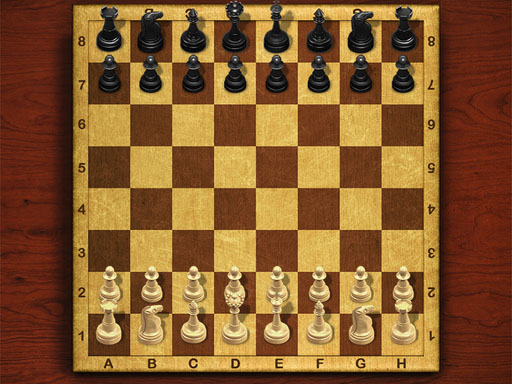
The best way to learn is to play. Set up a game on the same screen, play your chosen opening, and see how your friend answers. Master Chess Multiplayer has a mode for two players on one device, and 2 Player Online Chess and Chess Master King have two-player options too. Check the mode list on each page before you start. All our board games are in the Board and Card games category.
Keep reading: how to play chess for beginners, how to play checkers, how to win at tic tac toe and the best board games for 2 players.
FAQ
- What is the best chess opening for beginners?
- The Italian Game (1.e4 e5 2.Nf3 Nc6 3.Bc4) for White, because the plans are clear and the opening develops pieces quickly. The London System (1.d4 followed by Bf4, e3 and c3) is a good quiet alternative.
- What should I play as Black against 1.e4?
- 1...e5 is the most direct reply and leads to the Italian Game or Ruy Lopez. The Caro-Kann (1...c6) is a solid choice with less theory.
- What should I play as Black against 1.d4?
- 1...d5 is the simplest. You meet 2.c4 with 2...e6 or 2...c6, and develop your knights and bishops.
- What is the Queen's Gambit?
- 1.d4 d5 2.c4. White offers a pawn to pull Black's d-pawn away from the centre. If Black takes it, White can win the pawn back with 3.e3 or 3.Nf3, so it is not a true sacrifice.
- How many chess openings should a beginner learn?
- One as White, one answer to 1.e4 and one answer to 1.d4 as Black. Play each ten times before adding another.
- How long should a chess opening last?
- About ten to twelve moves. By then you should have developed your knights and bishops, castled, and fought for the centre.
- What is the fastest checkmate in chess?
- Fool's mate: 1.f3 e5 2.g4 Qh4#. It needs White to play two bad moves, so it almost never happens.
- Should I memorise opening moves?
- Learn the ideas first: control the centre, develop pieces, castle. Learn a few moves of the lines you play, and understand why each one is played.